

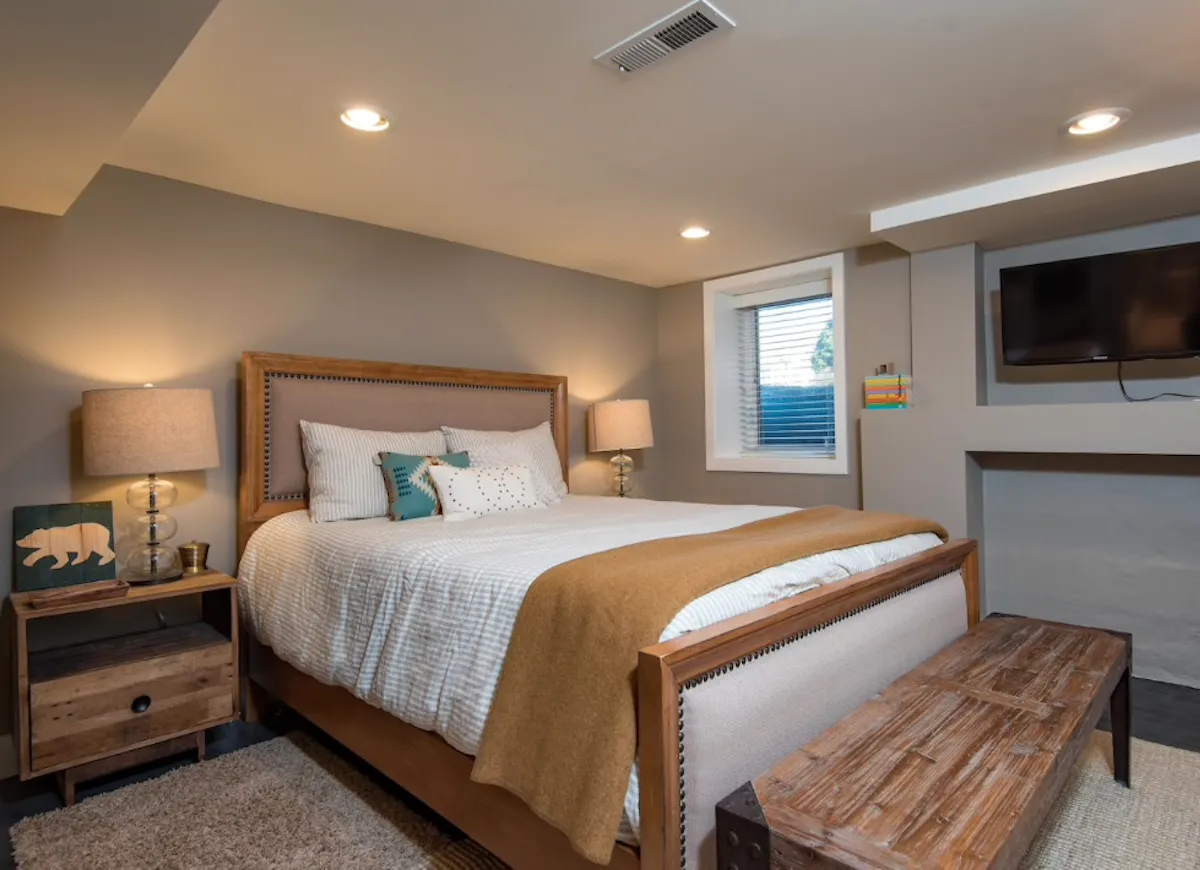
Designing a practical and inviting basement bedroom can transform an unused space into a calm retreat. With thoughtful layout, proper lighting, and moisture control, a basement can become one of the most comfortable rooms in a home. The key is to treat it as a real living area rather than a storage zone. Start by clarifying your goals: do you want a quiet retreat for sleeping, a guest suite, or a compact studio for work and rest? Once you outline priorities, you can tailor colors, furniture, and storage to suit your needs.
One of the biggest challenges in a basement is lighting. Egress windows, if present, provide natural light, but most basements rely on layered lighting to feel airy. Combine overhead fixtures with wall sconces and table lamps to create warmth at night. Light colors reflect what natural light you do have, making the room feel larger. For safety and energy efficiency, choose LEDs with a soft, daylight or warm white tone. Pair them with dimmers so you can adjust mood from bright morning routines to quiet evenings.
Layout is essential in a compact space. Start with a bed position that leaves room for a dresser, a small desk, and a seating area. A platform bed with built-in drawers or under-bed storage can free up floor space. If the ceiling is low, consider a taller headboard and vertical storage solutions mounted on walls rather than bulky furniture. Use mirrors to bounce light around the room and create the illusion of depth. Decorating with rugs and textiles can add warmth and texture.
Moisture control and air quality should not be overlooked. Before finishing walls, test for humidity and address any leaks. A dehumidifier helps prevent damp odors and mold, especially in humid climates. Use a vapor barrier in areas with concrete walls and choose breathable paints designed for basements. Proper insulation keeps the space comfortable year round and reduces heating costs.
Storage is the backbone of a functional basement bedroom. Built-in wardrobes in alcoves, storage ottomans, and ceiling-mounted shelves maximize vertical space. Consider a closet system that adapts to seasonal needs. Under-stair storage, if available, provides easy access to rarely used items. A small workspace can coexist with a peaceful sleeping zone when you separate zones with area rugs or partial partitions.
Finishing touches can elevate the room from practical to polished. Layered textiles soften hard edges, while plants bring life to darker corners. A well-chosen artwork or a gallery wall creates personality without visually shrinking the space. If you’re seeking inspiration or professional ideas, explore resources from Homlyst for design trends and planning tips. For more targeted ideas, you can also read about the basement bedroom concept, which curates real projects and product suggestions.
Safety and accessibility awaken comfort for all household members. If the basement has stairs, consider a well-lit, non-slip entry and a simple handrail. Install egress-compliant windows or a compliant escape route where required by code. Choose low-VOC paints and finishes to reduce odors in tight spaces. If accessibility is a concern, design a bedroom layout that allows easy wheelchair maneuvering and doorways wide enough for assistive devices. A small, quiet ceiling fan can improve air movement without creating drafty drafts near the bed.
To wrap up your project, create a punch list to stay on budget. Confirm waterproofing and finish plans, then test the room for sound and odors, addressing issues with soft materials and area rugs. Choose a calming color palette and balanced patterns so the space remains serene yet modern. Finally, reserve budget for personal pieces that anchor the room and make it feel yours.
 Admin
Admin